Outcomes, not routes.
You declare the outcome you want; the network finds the route. Specify the result, not the transaction, across chains, venues, and protocols.
No routes to build. No paths to maintain.
A distributed intent solver engine for agents, builders and traders. Declare your intent, Minotaur finds and executes the best route across chains, DEXes, and protocols.
 →
→ →
→
Minotaur turns natural language into optimal onchain execution. Not just swaps, but any DeFi intent. From lending and borrowing to complex multi-protocol strategies, agents access the full breadth of DeFi through a single execution layer that validates every action and delivers the most secure and efficient execution possible.
Powered by decentralized miner competition, Minotaur perpetually optimizes without a central contributor. Every improvement deploys onchain, each one compounding into the next, a self-improving, state-of-the-art execution layer that cannot be stopped, cannot be controlled, and compounds its advantage over time.
Intents can execute without Minotaur, but nothing checks that the outcome matches the intent. Minotaur sits between intent and execution.
Apps own the intent surface: a Solidity contract paired with a JavaScript scoring module. Users (or their agents) sign intents into a specific App; the OrderBook accepts them; the solver dispatches per-App. The same engine serves every App.
Validators all run the network's champion solver: open-source code authored by the winning miner. Each plan runs on a forked chain and is dual-scored: chain invariants plus outcome against the signed intent. Miners compete to dethrone the champion.
Validators don't trust the winning plan. They re-run it. Each validator independently simulates and re-scores. N-of-M sign with EIP-712. The Relayer submits the co-signed transaction. No central server, no single point of failure.
Every execution is scored against the declared outcome. The best-scoring miner becomes the network champion and earns 100% of emissions, until a challenger beats it by a 0.5% dethrone margin. The Solving Engine self-improves with every solved intent.
You declare the outcome you want; the network finds the route. Specify the result, not the transaction, across chains, venues, and protocols.
No routes to build. No paths to maintain.
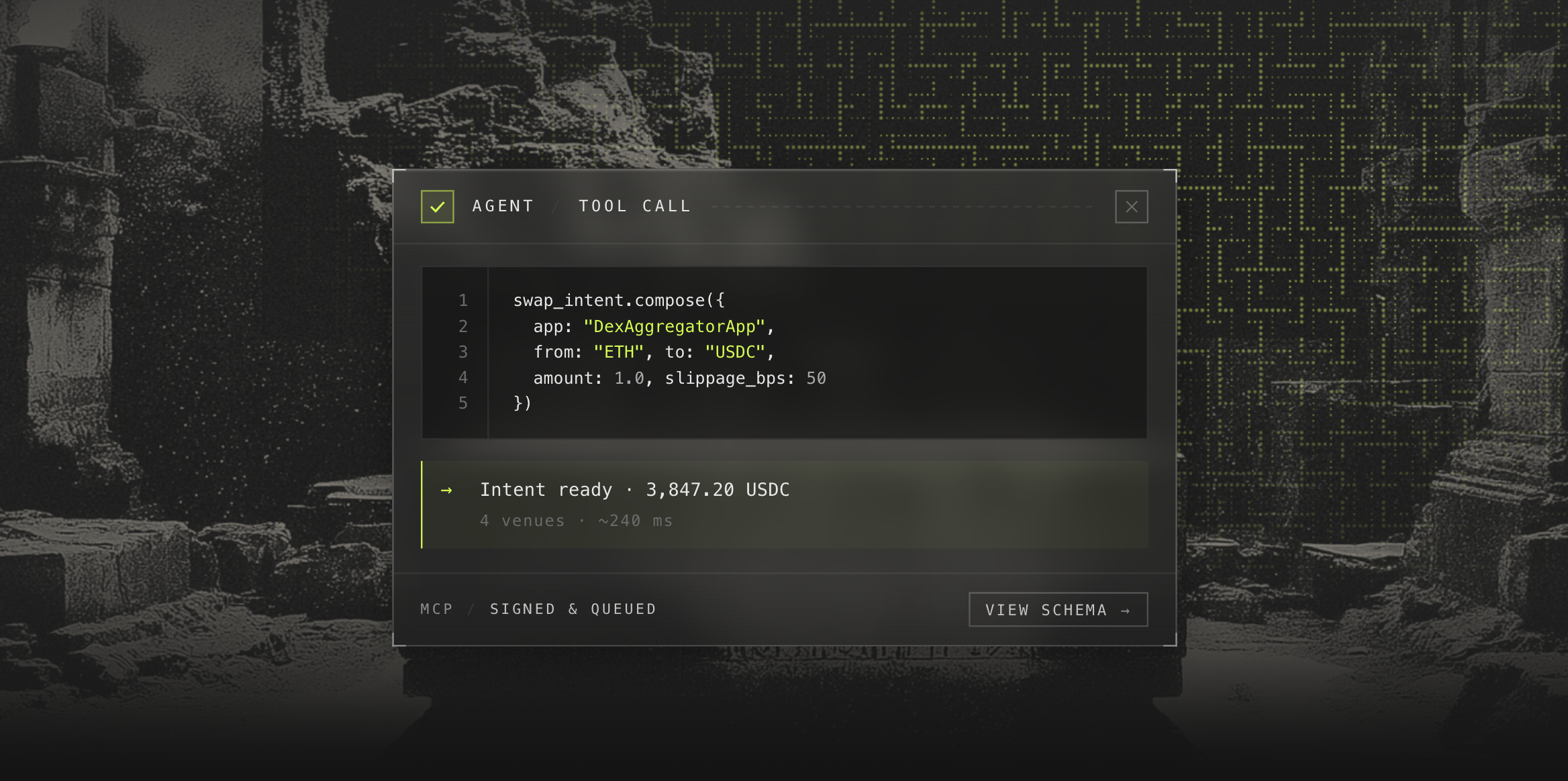
Agents can't reliably navigate raw DeFi, but they don't have to. They pick an App, use its MCP tools, and declare an intent. Bad executions surface as failed intents, not silent losses.
Any agent can act on DeFi without building transactions.
Every Minotaur App returns a binding quote (price, slippage envelope, venue path) before the signature. Quoted, then signed, then verified.
Know the price, slippage, and path before you commit.
The miner role is designed for LLM-driven agents. AI loops author and improve solver code; the network picks the champion. Miners compete to ship the best one.
The solver gets better while you trade.
Every winning plan is re-simulated by a validator quorum before settlement, with N-of-M consensus to commit. The quorum is also the oracle: no separate data source to trust.
No single party can pause, manipulate, or hide execution.
Each App's scoring decides whether a plan resolves the intent, and how well. The gate weeds out failed plans; the gradient ranks the rest. Better miners earn more.
Bad executions don't clear. Good ones get better.
Apps for traders, tools for agents, and an open platform for builders, all powered by the Solving Engine.
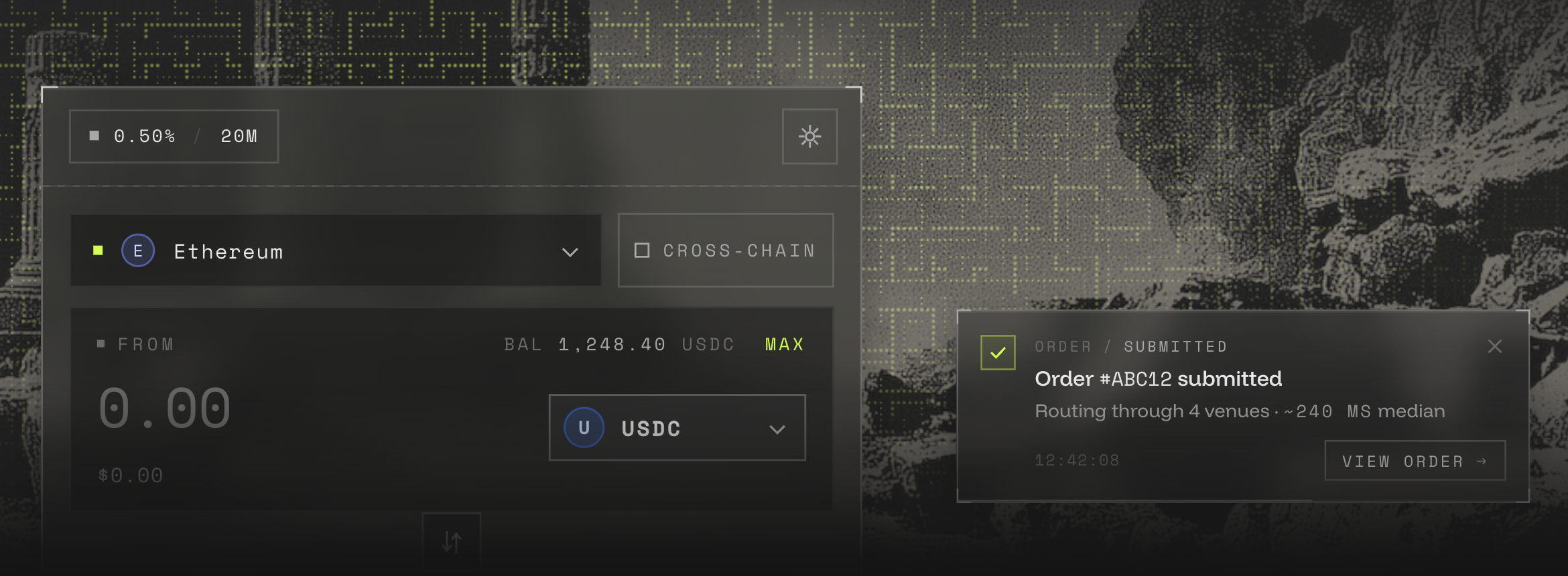
Multi-DEX routing with positive slippage capture. Live on Base across Uniswap V3 + Aerodrome Slipstream; Ethereum and Bittensor EVM next.
Open app35 tools exposed through an MCP server. Agents discover deployed Apps, pick the right one, and construct App-typed intents, without hand-rolling transactions.
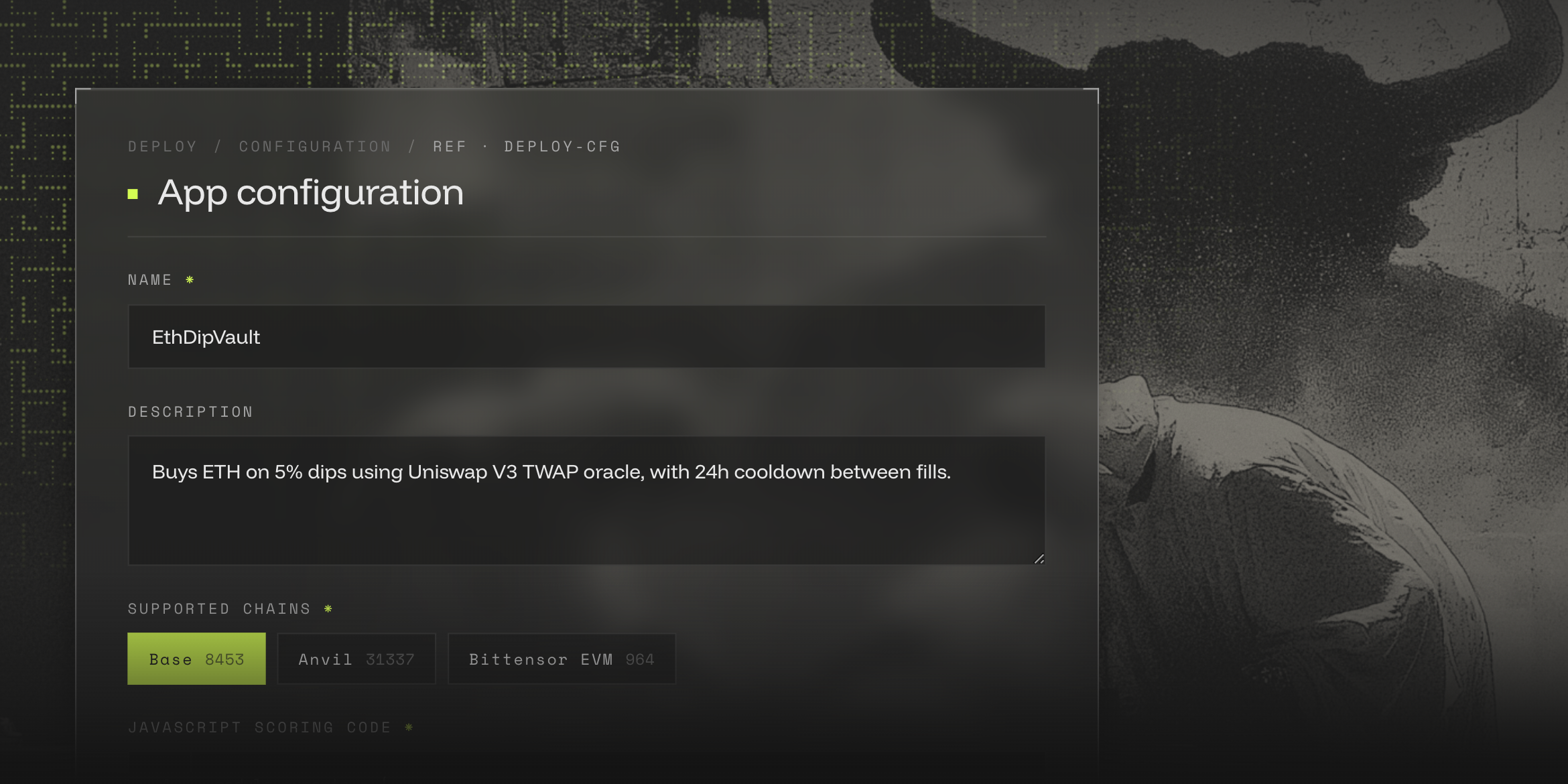
Permissionless App deployment. From then on, anyone ships Apps (Solidity contract + JS scoring) listed in the Minotaur marketplace and inheriting the network's solver competition, validator quorum, and outcome scoring.
Live Live Live  Soon
Soon  Soon
Soon The Minotaur app: every live App in one interface. Browse the marketplace, sign your first intent, settle through quorum.
Architecture, scoring, SDK references, full spec for App developers. Start with the protocol overview.